Smoked Pork Belly Ramen
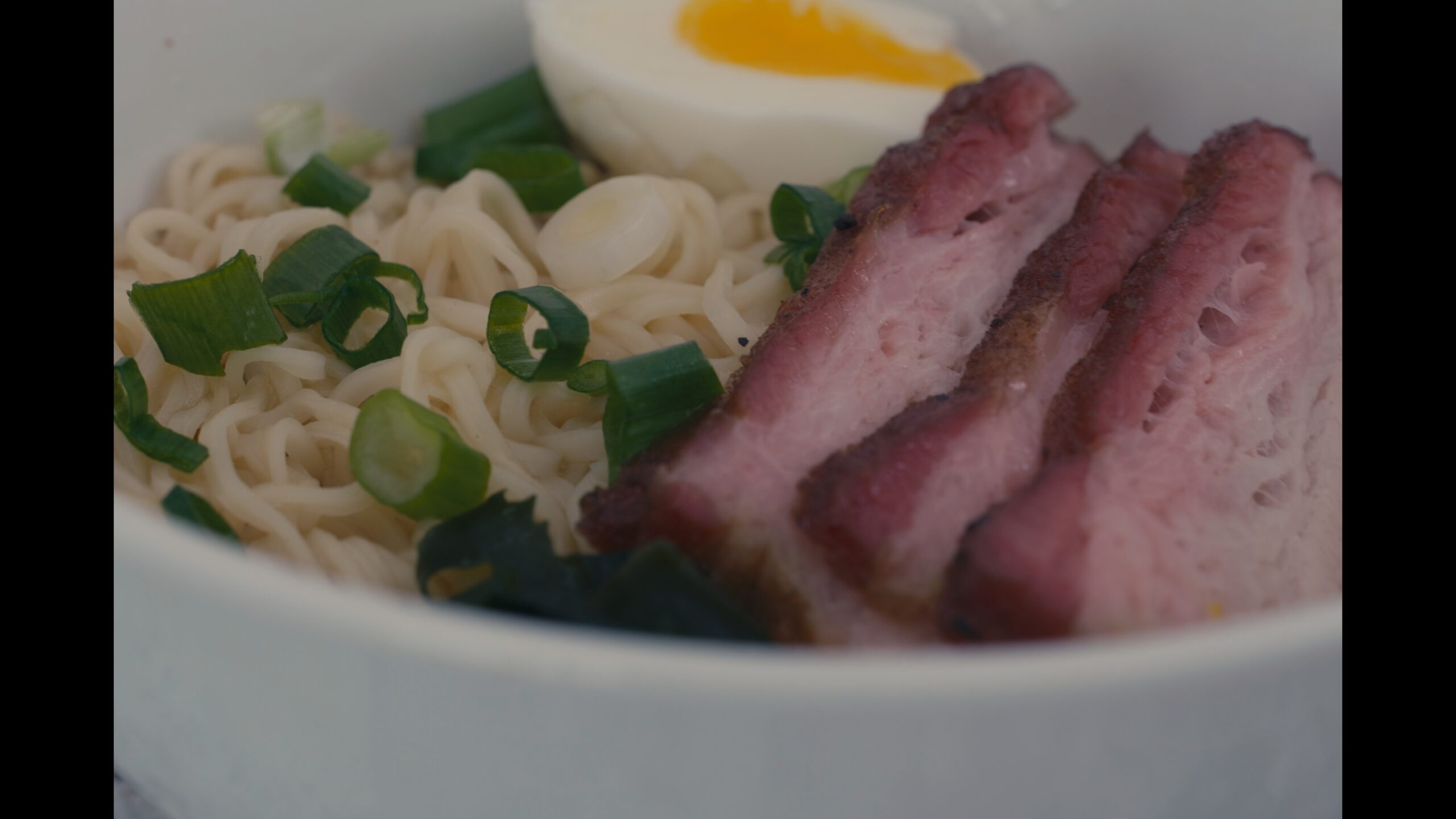
Smoked pork belly ramen is a miso bowl built on a 12-hour pork neck-bone broth, finished with thin slices of pre-smoked pork belly seared to bring the bark back. It is one of the best uses for leftover competition pork belly.
| Broth simmer | 12 hours, low rolling boil |
| Broth base | Miso tare |
| Pork belly | Pre-smoked, seared 90 seconds a side |
| Total time | 12 hours 45 minutes |
| Yield | 4 bowls |
This started as a way to use leftover belly from a Banh Mi cook. It turned into one of my favorite bowls. Smoke gives the broth something you cannot fake. Build it in layers. Tare first, then the broth. Do not rush the 12 hours.
Watch the full cook on YouTube.
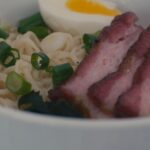
Smoked Pork Belly Ramen
Equipment
- Smoker
- Large stock pot
- Fine mesh strainer
- Cast-iron skillet
Ingredients
Tare (Seasoning Base)
- ⅔ cup Kikkoman soy sauce
- 3 tbsp mirin Wan Ja Shan
- ¼ cup cooking sake
- 1 tbsp shiro miso not more
- 1 small strip kombu about 2×2 inches
- ¼ cup bonito flakes
- ¾ tsp white pepper
- 1 tsp freshly grated ginger
- 1 smashed garlic clove
- 1 –2 tsp rice vinegar to finish
Pork Broth
- 6 lbs pork neck bones
- ½ lb dried shiitake mushrooms
- Water enough to fully cover bones
Instructions
Make the Tare
- In a saucepan, combine the soy sauce, mirin and sake.
- Add the kombu and slowly bring the mixture to a gentle simmer.
- As soon as you see small bubbles forming, turn off the heat.
- Add the bonito flakes and let steep for 5 minutes.
- Strain through a fine mesh strainer and return the liquid to the pan.
- Add ginger, white pepper, smashed garlic and shiro miso.
- Simmer gently until fragrant. Do not boil aggressively.
- Strain again and finish with rice vinegar.
- Taste it. Adjust if needed. If you prefer more salt, add a splash of soy. This is a base recipe. Make it your own.
- Let the tare cool and store in the refrigerator. It improves after a day or two.
Build the Broth
- Place pork neck bones in a large stock pot and cover completely with water.
- Bring to a boil and let it cook until the water becomes foamy and cloudy.
- Turn off the heat and pour everything into a strainer.
- Rinse the bones thoroughly under cold water to remove impurities.
- This step is critical. It’s what gives you a clean, rich broth instead of something muddy.
- Return the cleaned bones to the pot.
- Add dried shiitake mushrooms.
- Cover with fresh water.
- Bring to a low rolling boil and maintain for 12 hours.
- You want movement, not a hard boil, just steady agitation to develop that cloudy pork broth ramen is known for.
- Strain and store in an airtight container.
- Like the tare, the broth benefits from resting a day or two in the refrigerator.
Assemble the Bowl
- Bring broth back to a simmer.
- Cook ramen noodles according to package instructions.
- Add 1–2 tablespoons of tare to the bottom of each bowl.
- Add noodles.
- Pour hot broth over the top.
- Layer in sliced smoked pork belly.
- Add a soft-boiled egg, seaweed and any additional toppings.
Video
Notes
Pitmaster Notes
Use belly that was smoked the day before. It slices cleaner cold and holds up better in the hot broth. Hit it in a dry cast-iron for 90 seconds a side before adding to the bowl. That step brings the bark back and adds texture you won’t get from going straight into the liquid. Miso broth is the right call. It has the body to hold the smoke without fighting it. You just built an authentic bowl of ramen in your own kitchen using leftovers most people would overlook.
Frequently Asked Questions
Can you use competition-smoked pork belly in ramen?
Yes. And the smoke does something to the broth that you won’t get any other way. Slice it thin, hit it briefly in a hot dry pan to re-crisp the exterior, then drop it in. Miso and tonkotsu broths both handle the smoke well.
What ramen broth works best with smoked pork belly?
Miso or tonkotsu. Both have enough body to stand up to the smokiness. A lighter shio or shoyu broth can work, but the smoke will dominate. Pull back your smoke time by 30 minutes if you go that route and want balance.
How do you reheat smoked pork belly without drying it out?
Slice it cold. Sear in a dry cast-iron over medium-high, 1 to 2 minutes a side. The heat re-renders the fat and brings the texture back. Don’t microwave it. You’ll lose the bark and the texture in the same move.
How long does it take to make ramen broth?
About 12 hours of simmering. You want a low rolling boil with steady movement, not a hard boil, to pull a rich cloudy pork broth from the neck bones. The broth and the tare both improve after a day or two in the refrigerator.
What is tare?
Tare is the seasoning base that flavors the bowl before the broth goes in. Ours is soy sauce, mirin, sake, kombu, bonito, miso, ginger and garlic, simmered gently then strained. You add 1 to 2 tablespoons to the bottom of each bowl.
Can I make the broth ahead of time?
Yes, and you should. Both the broth and the tare get better after one to two days in the refrigerator. Make them ahead and serving day is just noodles, broth and toppings.
Machete Boys BBQ is run by the 2023 American Royal World Series of Barbecue Reserve Grand Champion, based in Minneapolis. Methods honed in competition, built for your backyard. Read the full story →
This bowl was born from leftover pork belly from our Banh Mi cook, but any leftover smoked meat belongs here.